
00:00 — Charge · 200°C
The coffee is still breathing.
Hot water on coffee roasted this week makes the grounds rise, crack and breathe out the gas the roast left inside, so every cup gets thirty seconds before we pour the rest. Mihmas roasts and brews on Al-Ba’ouniyah Street in Jabal Al-Weibdeh, and the page below is one of our roasts, ten minutes long.
The page follows our house roast: charged at 200°C, turning point 92°C at 1:05, dry end 152°C at 4:40, first crack 196°C at 8:20, dropped at 205°C at 9:50.
A seed, not yet a bean
Green coffee is a seed: hard, grassy, a little like dried peas if you bite one. Drop it into a hot drum and it drinks the heat so fast that the probe falls to ninety-odd degrees before it turns and climbs. Everything we sell starts here, as small lots of green coffee from Ethiopia, Yemen, Kenya and Rwanda, bought by the sack, cupped on the long bench upstairs and kept in jute at the back of the shop, away from the window.
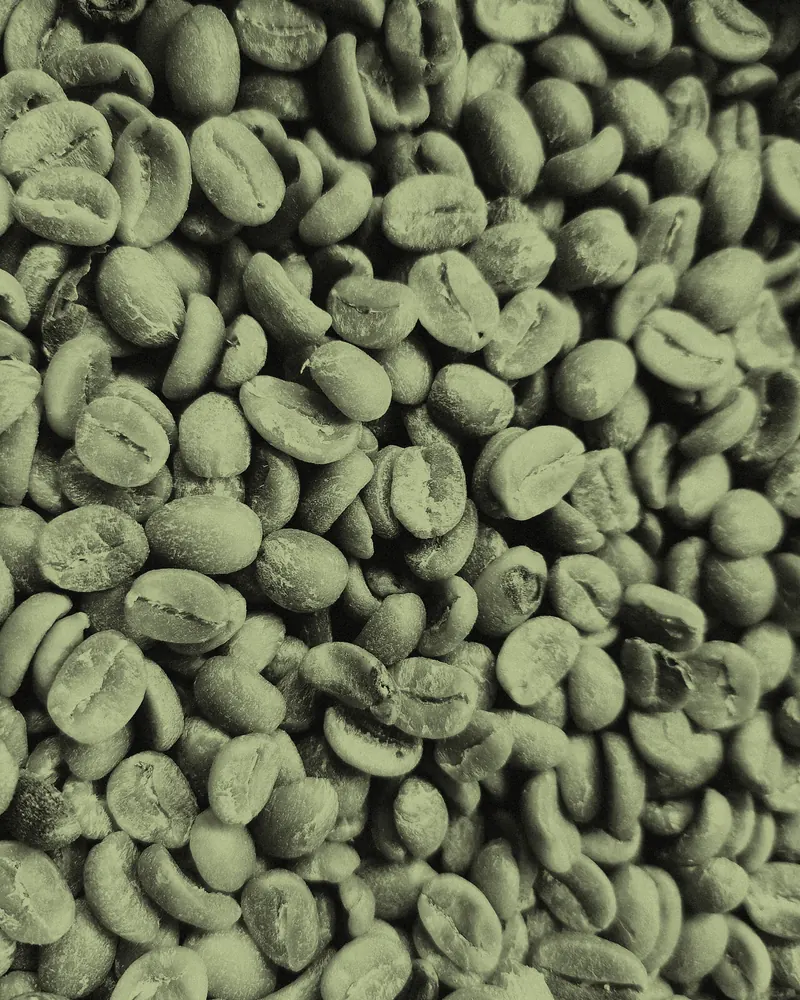
The room smells of hay, then of bread.
Around the fifth minute the beans go from green to straw and the room smells of hay, then of a bakery. That’s the water leaving. We roast on a five-kilo drum in the back room every Sunday and Wednesday from eight until noon, four kilos of green at a time, and about three and a half come out: few enough to taste every batch the same afternoon. If you cross Paris Circle on a roast morning, you’ll find us before you see the door.
Who drank it first?
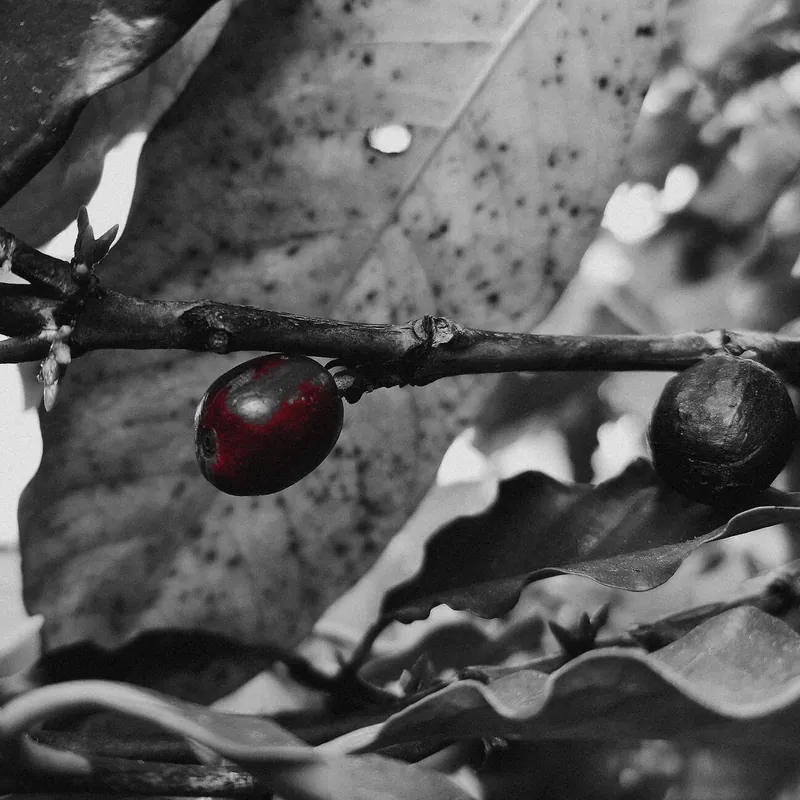
Coffee is a local story before it’s a global one. The plant comes from the highlands of Ethiopia. People first drank it as a brew in fifteenth-century Yemen, in Sufi circles that needed to stay awake through the night. For about two hundred years nearly all the world’s coffee left through one Red Sea port, al-Mukha. On this side of the Jordan the habit became qahwa sada: beans roasted at the fire in a long-handled iron pan, the mihmas, pounded in a wooden mihbash and boiled with cardamom. We named the roastery after the pan, and the longer story is in this season’s journal.
08:20 — First crack · 196°C
First crack
A sound like popcorn heard through a wall. The beans split along the seam, and the flavour we chose the coffee for has about a minute and a half left to develop. Of the nine on the shelf, these three cracked on the last roast day:
Ask for Turkish and we’ll ask how sweet.
At the bar we brew what we roast: espresso pulled at eighteen grams, filter by the cup from any coffee on the shelf, and qahwa sada simmered in a dallah the way it’s made at home, cardamom and all. The bar menu has the rest, with the numbers we work to.
- Espresso18 g in · 38 g out · 28 s
- V60, by the cupbloom15 g · 250 g water · 3:00
- Qahwa sadasimmered 20 min · cardamom
Al-Ba’ouniyah Street
Up the stairs from Downtown, or a short walk from Abdali. Saturday to Thursday 07:30–21:00, Friday from 13:30. Every bag carries its roast date; filter roasts are at their best from the fourth day.